For many people, a wood stove is part of a cosy home, and a ventilation system part of a healthy indoor climate. Anyone wanting to run both in the same house soon runs into concerns: can the ventilation deprive the stove of combustion air, and are the two even allowed to run at the same time? The good news is that a wood stove and ventilation system can be combined safely if the stove, ventilation unit and safety technology are planned together from the start.
This guide shows you why the combination is a planning issue, what role the type of stove plays and which requirements the chimney sweep checks. You will also learn how to set up the ventilation system for stove operation and which mistakes cause problems in everyday use.
Why a wood stove and ventilation system must be planned together
Modern new buildings and renovated houses are built to be very airtight. A permanently airtight building envelope has been a requirement of German building energy law for years, which since 29 July 2026 has been governed by the Building Modernisation Act (GModG). At the same time, the necessary minimum air exchange must be ensured. In the past, air constantly flowed in through leaky windows and joints, which a stove could use for combustion. In an airtight house, this supply is missing. Any system that moves air outdoors can therefore create noticeable negative pressure more quickly.
This is critical for a wood stove, because the chimney needs a stable draught for the flue gases to escape reliably. If the flow reverses, flue gases containing carbon monoxide enter the living space. When a house is newly built or extensively renovated, a ventilation concept in accordance with DIN 1946-6 is required anyway. The stove should be taken into account there from the outset. You can read more about this in the guide Ventilation Concept According to DIN 1946-6.
Room-air-dependent or room-air-independent: the most important decision

Whether the combination is simple or complex depends above all on the type of wood stove. A room-air-dependent stove draws its combustion air from the room in which it is installed. It is sensitive to negative pressure; in practice, a limit of 4 pascals between the room and the outdoor air applies. A room-air-independent stove, on the other hand, draws its combustion air directly from outside through an airtight duct, for example via a separate supply air duct or an air-flue gas chimney.
However, a stove only counts as room-air-independent if it has a general building authority approval from the German Institute for Building Technology (DIBt). The approval confirms that the stove, door and connections are airtight up to a negative pressure of 8 pascals in the installation room. A stove with just an outdoor air connector does not automatically meet this requirement. When buying, look for the approval number in the documentation.
| Feature | Room-air-dependent stove | Room-air-independent stove (DIBt) |
|---|---|---|
| Combustion air | From the installation room | From outside through an airtight duct |
| Permissible negative pressure | 4 pascals | Up to 8 pascals according to the approval principles |
| Safety device | Usually required, for example an air pressure monitor | Usually not needed, decided by the chimney sweep |
| Suitability for an airtight new building | Only with additional safeguards | Well suited |
Safety devices and approval by the chimney sweep
The legal basis is the combustion installations ordinance of your federal state, which is modelled on the Model Combustion Ordinance. According to section 4 (2), a room-air-dependent fireplace may only be operated in rooms from which fans extract air if safety devices prevent simultaneous operation, the flue gas discharge is monitored or the system is designed so that no dangerous negative pressure can occur. Ventilation systems, range hoods and vented tumble dryers are explicitly mentioned. As of November 2026; regional differences between the federal states are possible.
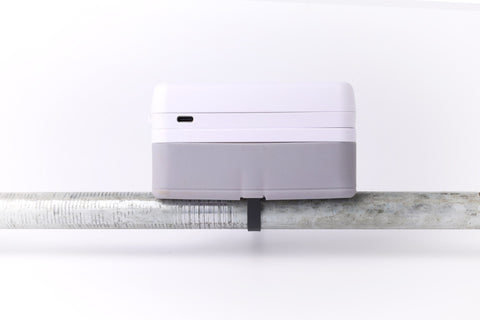
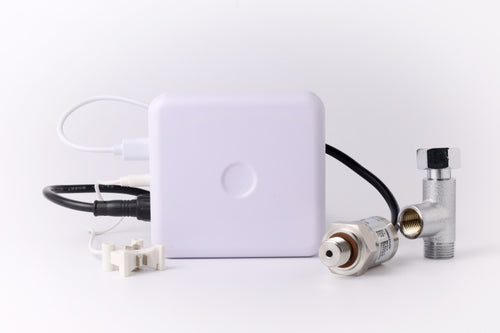
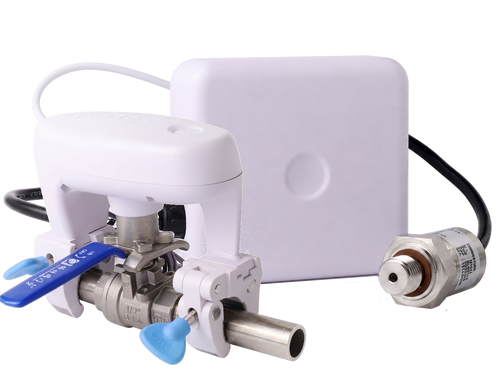
For a room-air-dependent stove, specialist companies usually install an approved air pressure monitor. It measures the pressure difference between the installation room and the outdoor air via a measuring hose to the outside and switches off the ventilation as soon as the negative pressure exceeds 4 pascals. The guide Air Pressure Monitors for Fireplaces explains when the chimney sweep requires such a device. For a room-air-independent stove with DIBt approval, this requirement often does not apply, provided the ventilation system stays within the permissible value. If the ventilation installer cannot reliably demonstrate this, the chimney sweep may still require an additional safeguard. You should therefore get them on board before ordering the stove and ventilation unit.
Setting up the ventilation system correctly for stove operation

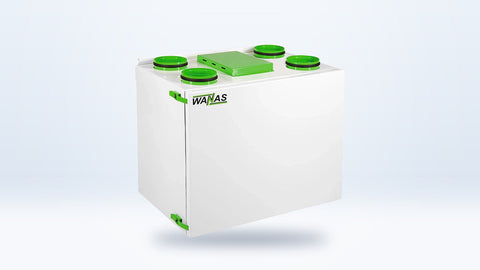
In normal operation, a central ventilation system with heat recovery supplies roughly the same amount of supply air as extract air. To keep it that way, the system must be commissioned with measured air flows, and the air volumes must be documented. Otherwise, small deviations add up, and a balanced system unnoticeably becomes one that extracts slightly more than it supplies.
Frost protection for the heat exchanger is particularly important. Many units reduce the supply air during frost while the extract air keeps running. This is exactly what creates negative pressure, often on cold evenings when the stove is burning. A preheater in the outdoor air keeps the heat exchanger free of ice without the supply air having to be reduced. You can read more about this in the guide Heating Coils in Ventilation. Some ventilation units also offer a fireplace or stove function that briefly reduces the extract air when lighting the fire. It is a convenience feature but does not replace an approved safety device.
Taking range hoods and other extract devices into account
The ventilation system is rarely the greatest risk. A range hood in extraction mode can move many times the air volume of a residential ventilation system and lower the pressure in the house quickly. In a house with a wood stove and controlled ventilation, a recirculation hood is therefore often the simplest solution. If it has to be an extraction hood, it needs its own safeguard, for example via the air pressure monitor or a window contact switch. The same applies to vented tumble dryers and extract fans in bathrooms and toilets.
Wood stove and ventilation system in everyday use
Once everything has been approved, there is little standing in the way of running both together. In most concepts, the living room with the stove is a supply air room, and the stale air is extracted in the kitchen, bathroom and toilet. The ventilation brings in fresh air but hardly distributes the stove's heat around the house, as the air volumes of residential ventilation are too small for this. If the living room becomes too warm, burning less fuel helps more than a higher ventilation setting.
Make sure the filters are clean. A clogged outdoor air filter reduces the supply air while the extract air continues unchanged, upsetting the balance of the system. If the air pressure monitor switches off frequently, this is often the first sign. Test the safety device regularly using the test button and have the stove, chimney and ventilation serviced at the intended intervals. Open the stove door slowly to add fuel and only once the fire has burned down; then hardly any smoke can escape. A carbon monoxide detector in the installation room is a useful additional warning, but it replaces neither the safety device nor the approval inspection.
Frequently asked questions
Can I take my old wood stove with me into a house with a ventilation system?
In principle, yes, but a room-air-dependent stove then usually needs an approved safety device such as an air pressure monitor. The stove must also meet the limit values of the German First Federal Immission Control Ordinance (1. BImSchV). For older stoves without corresponding proof, the last transition period expired at the end of 2024; they had to be retrofitted or decommissioned. Clarify both with the district chimney sweep in advance.
Do I also need an air pressure monitor with decentralised ventilation?
That depends on the units. Units with heat recovery that operate in pairs create hardly any negative pressure in normal operation, whereas pure extract fans do. The chimney sweep assesses the entire combination.
What does it cost to safeguard a wood stove and ventilation system?
That depends on the device, the installation situation and the electrical work. It is usually cheapest to decide on the solution at the planning stage. Retrofitting ducts for combustion air or measuring hoses is considerably more complex.
Can the ventilation system run while the stove is burning?
Yes, with a room-air-independent stove and a properly adjusted system, this is the normal case. With room-air-dependent stoves, the air pressure monitor ensures that the ventilation only switches off when the negative pressure becomes critical.
Conclusion
A wood stove and a ventilation system go well together if the combination is planned from the start. The most important decision is the type of stove: a room-air-independent model with DIBt approval makes many things easier than a room-air-dependent stove with additional safety technology. Just as important are a ventilation system with measured air flows, frost protection without reduced supply air and a well-thought-out solution for the range hood. Involve the chimney sweep early, and there will be no surprises at the approval inspection. You will find suitable components in our Ventilation Systems and Kitchen Extraction and Range Hoods categories.