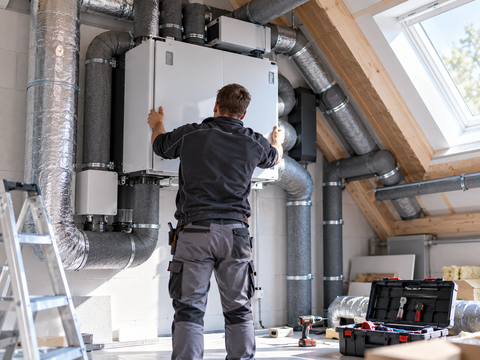
Pollen Filters for Allergy Sufferers: How a Ventilation System Helps

For many people, pollen season means sneezing, itchy eyes and poor sleep. Airing, of all things, then becomes a problem, because open windows let even more pollen in. A pollen filter in the ventilation system reverses this principle: it filters the outdoor air before it enters the home and keeps pollen and fine particulates outside.
In this guide, you will learn why classic window airing is unfavorable for allergy sufferers, how a pollen filter in a ventilation system works, which filter class you need and what to look for when it comes to prefilters and replacement. This is how you turn your home into a low-pollen zone.
Why window airing is the problem for allergy sufferers
When you air through the window, outdoor air flows in unfiltered, along with everything that is currently in the air: grass, tree or birch pollen, fine particulates and soot. Especially on warm, windy days, the pollen concentration is high, and that is exactly when you would actually like to air. For allergy sufferers, this is a dilemma: fresh air, yes, but please without the triggers.
Controlled residential ventilation solves this dilemma. It continuously supplies the rooms with fresh air while the windows can stay closed. The decisive component is the filter in the supply air: it determines how many of the unwanted particles actually stay outside.
How a pollen filter in a ventilation system works
The right pollen filter for ventilation systems is generally a filter of class F7, designated ePM1 under the newer ISO 16890 standard. These filters capture around 50 to 65 percent of the finest particles down to about one micrometer and filter more than 80 percent of the PM2.5 particulate matter fraction. This size range is exactly where pollen fragments, fine particulates and many health-relevant airborne particles are found.
The effect is noticeable: the supply air enters the house clean, and the pollen load indoors drops significantly. For people with hay fever, asthma or other respiratory complaints, this is often the real reason why a ventilation system pays off. Read more about how ventilation and clean indoor air work together in our guide Healthy indoor climate.
Filter classes at a glance
Not every filter retains pollen. Many units are fitted with only a coarse standard filter at the factory. The following overview shows the differences:
| Filter class | Filters | For allergy sufferers |
|---|---|---|
| G4 / Coarse (standard) | coarse dust, insects, lint | unsuitable, lets a lot of pollen through |
| F7 / ISO ePM1 (pollen filter) | pollen, fine particulates, many airborne particles | recommended, the standard for clean supply air |
| F9 / ISO ePM1, high efficiency | very fine particles, higher separation efficiency | for high demands and heavy exposure |
A pure coarse dust filter of class G4 lets a considerable proportion of pollen pass unhindered. Allergy sufferers who want to benefit should therefore use at least an F7 filter in the supply air. We go into more detail about which class suits which application in our guide Filter classes explained.
Prefilters and filter replacement: how to maintain the effect
A fine F7 filter lasts longest when a coarse prefilter stage (G4) is installed upstream. This prefilter captures coarse dust so that the more expensive pollen filter does not clog as quickly. Without a prefilter, the F7 clogs sooner and has to be replaced more often.
Regular replacement is important: a clogged filter loses its effectiveness and increases the fan's power consumption. As a rule of thumb, you should replace the filters at least once a year; during pollen season or under heavy exposure, it is better to check them every six months. You can find suitable filters in our categories Air filters and Bag and compact filters.
Who benefits most from a pollen filter
A pollen filter provides cleaner indoor air for everyone, but the benefit is particularly great for certain groups: for allergy and asthma sufferers, for households in cities or on busy roads (particulate matter, soot) and for families with small children. Anyone who wants to sleep more peacefully also benefits, because the windows can stay closed at night while the air still stays fresh.
Pollen season: when exposure is highest
The pollen season extends over large parts of the year. The first tree pollen from hazel and alder is already in the air in late winter, followed by birch and other trees in spring, while grass and weed pollen dominate over the summer. Depending on the region and weather, exposure can last from February into the fall. The concentration is particularly high on dry, windy days as well as in the morning and early evening.
It is precisely during this long season that the ventilation system shows its advantage: instead of airing according to the pollen forecast calendar and always letting some pollen in anyway, the filtered fresh air supply simply runs continuously. You no longer have to weigh up whether it is a good time to open the windows; the system takes care of it evenly and reliably.
Frequently asked questions
Can I equip any ventilation system with a pollen filter?
Most central and decentralized units can be fitted with suitable F7 filters. What matters is the correct filter size and class for your model. If in doubt, check the unit manual or get some brief advice.
Does the pollen filter also help against fine particulates and odors?
Fine particulates, yes: an F7 filters out a large proportion of them. For odors, you also need an activated carbon filter, which is available as an additional stage.
Do I have to change the filter more often during pollen season?
Check it, yes. When pollen levels are high, the filter clogs faster. A quick inspection in spring and summer is worthwhile to maintain its effectiveness.
Does the pollen filter replace an air purifier?
It complements it. The ventilation system filters the incoming fresh air, while an air purifier cleans the air already in the room. For allergy sufferers, filtered supply air is the more important lever.
Is a pollen filter useful even without an allergy?
Yes. Even without an allergy, filtered supply air means noticeably less dust and fine particulate matter in the room. This results in cleaner, more pleasant air and also makes cleaning easier, because fewer particles are carried in from outside.
Does a pollen filter increase power consumption?
A clean filter hardly does. Only when it clogs does the fan have to work against the higher resistance and use more electricity. That is why timely replacement is important not only for filter performance but also for energy consumption.
Conclusion
For allergy sufferers, a pollen filter in the ventilation system is the key to a low-pollen home: the windows stay closed, and the fresh air comes in filtered. The right filter class is crucial: at least F7 or ISO ePM1 for pollen and fine particulates, ideally with a prefilter and regular replacement. This way, you bring clean air into the house without bringing the pollen with it. You will find suitable filters and advice directly in our shop under Air filters.